In this article
Every importer in Rwanda, Burundi and eastern Congo eventually faces the same question: should my cargo land at Mombasa or at Dar es Salaam? Both ports serve the Great Lakes region. Both are run by national port authorities with long experience of transit cargo. And both have loyal customers who would never use the other.
The honest answer to the Mombasa vs Dar es Salaam port question is that it depends. This guide shows you what it depends on, so you can make the decision with your forwarder rather than by habit. We compare the two ports and their corridors by destination, by cargo type and by the factors that change from month to month, and finish with a simple decision framework.
Mombasa vs Dar es Salaam port: the two gateways in brief
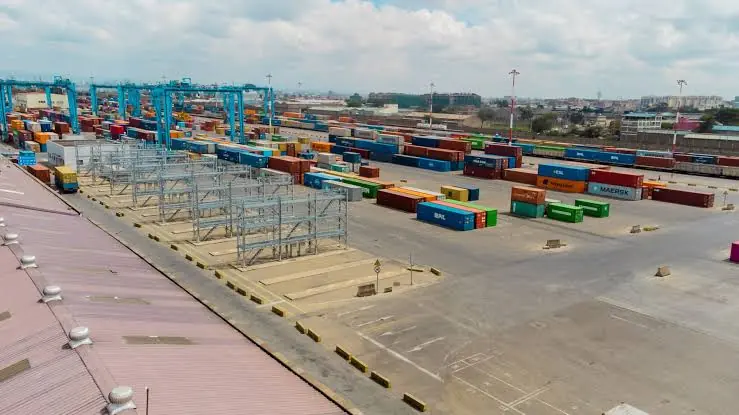
Mombasa is Kenya's main seaport, operated by the Kenya Ports Authority (opens in a new tab). It is the start of the Northern Corridor, which runs through Kenya and Uganda to Rwanda, Burundi, eastern DRC and South Sudan. The corridor is coordinated by the Northern Corridor Transit and Transport Coordination Authority (opens in a new tab) (NCTTCA), whose members are Burundi, the DRC, Kenya, Rwanda, South Sudan and Uganda.
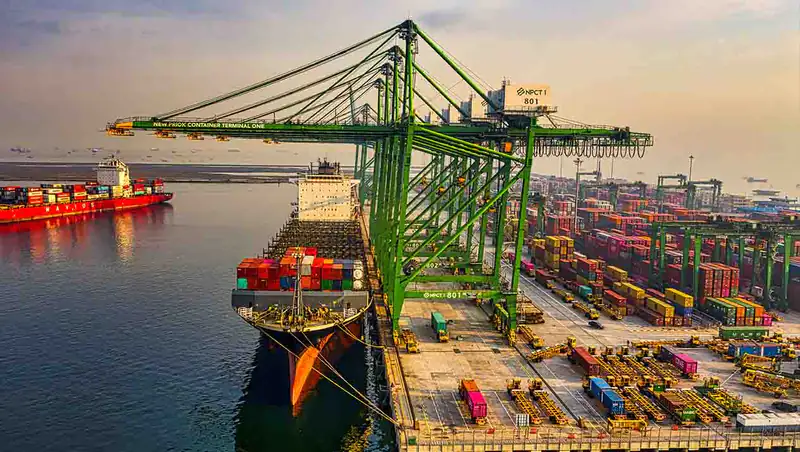
Dar es Salaam is Tanzania's main seaport, operated by the Tanzania Ports Authority (opens in a new tab). It anchors the Central Corridor, which crosses Tanzania to Rwanda, Burundi, the DRC and further afield. The Central Corridor Transit Transport Facilitation Agency (opens in a new tab) (CCTTFA) counts Burundi, the DRC, Malawi, Rwanda, Tanzania, Uganda and Zambia as members.
So both ports are formally connected to all three of the main Central African destinations. The difference lies in the route your cargo takes after it leaves the port.
Side-by-side comparison
| Factor | Mombasa (Northern Corridor) | Dar es Salaam (Central Corridor) |
|---|---|---|
| Port operator | Kenya Ports Authority | Tanzania Ports Authority |
| Corridor agency | NCTTCA | CCTTFA |
| Countries crossed to reach Rwanda | Kenya, Uganda | Tanzania |
| Main entry to Rwanda | Gatuna/Katuna or Kagitumba/Mirama Hills | Rusumo |
| Route to Burundi | Through Uganda and Rwanda, or through Tanzania | Directly from Tanzania (Kobero/Kabanga), or rail and lake via Kigoma |
| Route to Goma and Bukavu | Through Uganda and Rwanda, or Uganda direct into North Kivu | Through Rwanda |
| Route to Lubumbashi | Rarely practical | Through Zambia via Tunduma/Nakonde and Kasumbalesa |
| Customs for Rwanda and Burundi | Single Customs Territory: declare once at destination | Single Customs Territory: declare once at destination |
| Customs for the DRC | Transit through Kenya and Uganda (and Rwanda), import in the DRC | Transit through Tanzania (and Rwanda or Zambia), import in the DRC |
| Electronic cargo tracking | Regional Electronic Cargo Tracking System on the corridor | National and corridor systems; confirm per shipment |
| Rail and lake links used for Central Africa | Limited for these destinations | Central railway to Kigoma; TAZARA to Zambia; Lake Tanganyika |
We have deliberately left out distances, transit days and prices. They vary with the route, the season, the shipping line and conditions at the ports and borders, and any single number would mislead.
Comparing the ports by destination
Kigali and Rwanda
Rwanda is where the two ports compete most closely. From Mombasa, trucks cross Kenya and Uganda and enter Rwanda in the north. From Dar es Salaam, they cross Tanzania and enter at Rusumo in the east. Both routes are long and well used, and both use the EAC Single Customs Territory, so the Rwandan declaration can be lodged before the ship arrives.
In practice, the choice for Rwanda often comes down to the shipping line's schedule and rate into each port, the port situation at the time, and the inland transport offer. See our port-to-door services for Mombasa to Rwanda and Dar es Salaam to Rwanda.
Bujumbura and Burundi
For Burundi, Dar es Salaam usually has the edge. The Central Corridor reaches Burundi directly from Tanzania, by road at Kobero/Kabanga or by rail to Kigoma and then across Lake Tanganyika. From Mombasa, cargo has to cross Uganda and Rwanda or go round through Tanzania.
The Rwanda–Burundi border adds to the case for Dar es Salaam. Burundi closed its land border with Rwanda in January 2024, and KT Press reported in September 2026 (opens in a new tab) that it remains closed to people while goods continue to flow. A route that avoids that crossing is simpler to plan. Mombasa still makes sense when a shipping line offers a much better service into Kenya. Read Dar es Salaam to Burundi freight and Mombasa to Burundi freight for the detail.
Goma, Bukavu and the Kivus
Eastern DRC is genuinely open to both ports. From either coast, many trucks cross Rwanda and enter the DRC at Rubavu–Goma or Rusizi–Bukavu. From Mombasa there is a further option: travelling through Uganda directly into North Kivu, for example via Mpondwe–Kasindi, which can suit towns such as Beni and Butembo.
Because the Kivus are subject to sudden border changes, the deciding factor is often the situation at the crossing on the day the truck leaves. In May 2026, for example, the Goma–Rubavu crossings closed for about a month after an Ebola case in Goma (The EastAfrican (opens in a new tab)). Having both ports in mind gives you options. See Mombasa to Goma freight and Dar es Salaam to DRC freight.
Lubumbashi and the copper belt
South-eastern DRC is Dar es Salaam territory among these two ports. Cargo travels through Tanzania into Zambia at Tunduma–Nakonde and on to the Kasumbalesa border. The TAZARA railway is also part of the picture. Mombasa is rarely a sensible gateway for this region. Our Dar es Salaam to Lubumbashi freight guide covers the route.
A note on Kinshasa
Neither East African port is the natural gateway for Kinshasa and western DRC, which are mainly served through the Atlantic port of Matadi. If your buyer is in the west, talk to us before assuming an East African routing.
Comparing the ports by cargo type
Standard containers (FCL). Both ports handle them routinely. Compare total door-to-door cost and the container return.
LCL and consolidated cargo. Availability of consolidation services into each port, and of groupage trucks from each port to your destination, matters more than the port itself.
Heavy, oversized and project cargo. The route survey decides. Bridges, road gradients, permits and escort rules differ by corridor. Hilly western Rwanda is a factor for both ports when the destination is the Kivus.
Bulk and bagged goods. The rail and lake options on the Central Corridor can suit robust, non-urgent cargo bound for Burundi or the DRC shore of Lake Tanganyika.
Perishable and time-sensitive goods. Choose the route with the fewest hand-overs and the most predictable borders at the time. For very urgent cargo, consider air freight instead of either port.
Regulated goods. Food, medicines, chemicals and equipment subject to standards need the same destination permits whichever port you use. Get them first.
Factors that change from month to month
Some differences between the ports are structural. Others move with time:
- Shipping line networks. Lines add, drop and reroute services. A port that was better served last year may not be this year.
- Port congestion and productivity. Waiting times for berths and container release go up and down.
- Road conditions and works. Major road works, weather and accidents can slow a corridor for weeks.
- Border situations. Health, security and political events can close or slow a crossing.
- Truck availability. Inland transport capacity on each corridor varies with demand.
This is why we compare both ports for each shipment rather than assuming one is always better.
The cost components to compare
When you ask for quotes through both ports, make sure each one includes:
- ocean freight to the port of discharge;
- shipping line and terminal charges at the port;
- port storage, if the container is likely to stay beyond the free period;
- inland transport to your door;
- transit bonds, border fees and road charges;
- clearance fees at destination;
- duties and taxes (these depend on the goods, not on the port);
- the return of the empty container;
- insurance.
A port that looks cheaper on ocean freight can turn out more expensive door to door, and the reverse.
A simple decision framework
Work through these questions with your forwarder:
- Where exactly is the cargo going? Burundi or Lubumbashi point towards Dar es Salaam. North Kivu via Uganda points towards Mombasa. Kigali, Goma and Bukavu are open to both.
- Which port does your shipping line serve best from the origin? Check schedules, transhipments and reliability.
- What is the cargo? Special cargo may rule out a route or mode.
- What is happening on each corridor right now? Ports, roads and borders.
- What is the total door-to-door cost, including the container return?
- How much risk can you accept? If a border closure would be very costly, choose the route with a fallback.
If two or three answers point the same way, you have your port. If they conflict, cost and risk usually decide.
Mistakes to avoid
- Booking the ocean freight before deciding the inland route.
- Comparing ocean rates only, instead of door-to-door costs.
- Forgetting the Burundi cargo tracking note at the loading port.
- Choosing a route through a border that has just closed.
- Ignoring the time it takes to return the empty container.
How Haraka Freight helps
Haraka Freight International works with both gateways. We provide transportation, warehousing and distribution services in Kenya, Uganda, Tanzania, Rwanda and Burundi, and transit commodities to Goma and Bukavu. For each shipment we can compare Mombasa and Dar es Salaam side by side, recommend the better option for your cargo and manage the whole journey from the port to your door. Our sea freight to Rwanda service covers the ocean leg, and our hub guides explain how to ship cargo from Mombasa and how to ship cargo from Dar es Salaam in full.
Conclusion
Mombasa vs Dar es Salaam is not a contest with a permanent winner. Dar es Salaam often leads for Burundi and Lubumbashi; Mombasa often leads for Uganda and parts of North Kivu; Kigali, Goma and Bukavu can go either way. The right port for your next shipment is the one that gives the best door-to-door result under today's conditions. If you would like us to run that comparison for you, request a quote with your origin, destination and cargo details.
Sources: Kenya Ports Authority (opens in a new tab); Tanzania Ports Authority (opens in a new tab); NCTTCA (opens in a new tab); CCTTFA (opens in a new tab); KT Press (2026) (opens in a new tab); The EastAfrican (2026) (opens in a new tab).
Frequently asked questions
Is Mombasa or Dar es Salaam better for cargo to Rwanda?
Both serve Rwanda well. Mombasa uses the Northern Corridor through Kenya and Uganda; Dar es Salaam uses the Central Corridor through Tanzania to Rusumo. The better option for a given shipment depends on the shipping line, port conditions, the road situation and the total door-to-door cost.
Which port is best for Burundi?
Dar es Salaam is often the more direct choice, because the Central Corridor reaches Burundi from Tanzania without crossing another country. That has mattered more since Burundi closed its land border with Rwanda to people in January 2024.
Which port should I use for Goma or Bukavu?
Either can work. Goma and Bukavu are usually reached through Rwanda from both ports, and parts of North Kivu can also be reached through Uganda from Mombasa. We compare both before each shipment.
Which port serves Lubumbashi?
Among the two, Dar es Salaam is the usual choice, with cargo travelling through Tanzania and Zambia to the Kasumbalesa border. Mombasa is rarely practical for south-eastern DRC.
Does customs work differently at the two ports?
The principles are the same. Both Kenya and Tanzania apply the EAC Single Customs Territory for goods going to Rwanda and Burundi, and both handle DRC cargo as transit. The local systems and agencies differ, which is why an experienced forwarder matters.
Can I switch ports after my goods have shipped?
Not easily. The port of discharge is fixed on the bill of lading. Changing it at sea, if the shipping line allows it at all, is usually expensive. Decide the port before booking.
Published · Last updated

Haraka Freight International Ltd is a logistics company based at Ituze House, KG 11 Avenue, Bibare, Kigali, Rwanda. We handle freight forwarding, customs clearance, IOR/EOR and DDP shipments, warehousing, trucking and regional distribution in Kenya, Uganda, Tanzania, Rwanda and Burundi, with transit cargo to Goma and Bukavu.