In this article
- Mombasa and the Northern Corridor in brief
- Step 1: plan before the goods leave the supplier
- Step 2: get the documents right at origin
- Step 3: prepare the declaration before arrival
- Step 4: arrival and release at Mombasa
- Step 5: the road (or rail) journey inland
- Step 6: crossing the borders
- Step 7: clearance and delivery at destination
- How to ship cargo from Mombasa to each destination
- What drives the cost
- Mistakes to avoid
- Mombasa or Dar es Salaam?
- How Haraka Freight helps
- Conclusion
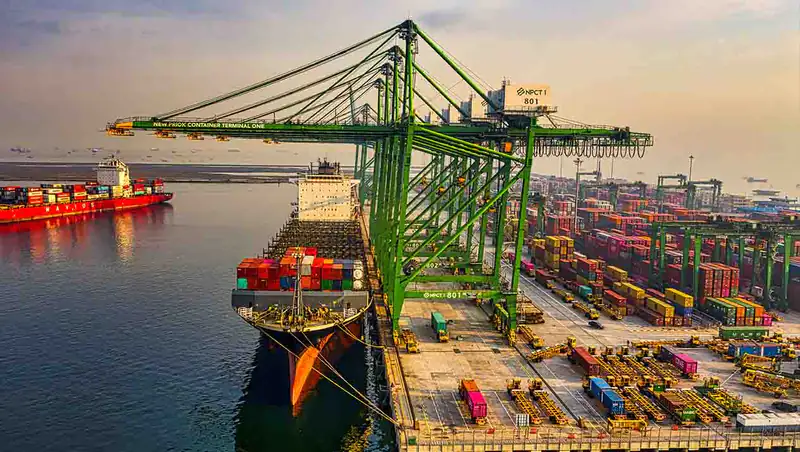
The port of Mombasa is the busiest gateway on East Africa's coast and the starting point for a huge share of the cargo bound for the landlocked heart of the continent. If you import into Rwanda, eastern DRC or Burundi, knowing how to ship cargo from Mombasa properly can save you weeks of delay and a great deal of money in port and container charges.
This hub guide walks through the whole process, step by step, and points you to our detailed guides for each destination and city. It is written for importers, exporters' logistics teams and procurement managers who want a clear, practical picture.
Mombasa and the Northern Corridor in brief
The port of Mombasa is run by the Kenya Ports Authority (opens in a new tab). From the port, the Northern Corridor carries cargo by road, rail and pipeline through Kenya and Uganda to Rwanda, Burundi, eastern DRC and South Sudan. Policy along the corridor is coordinated by the Northern Corridor Transit and Transport Coordination Authority (opens in a new tab), an intergovernmental body whose six member states are Burundi, the DRC, Kenya, Rwanda, South Sudan and Uganda.
For importers, the corridor is a chain of steps: sea freight, port handling, inland transport, several border crossings and customs at destination. A weak link anywhere costs time and money.
Step 1: plan before the goods leave the supplier
Good shipments are planned before anything is loaded.
Confirm the destination. Kigali, Goma, Bukavu and Bujumbura each mean a different route and different borders. Even within Rwanda, delivery to a site outside Kigali changes the plan.
Agree the trade terms. Decide with your supplier who books the ocean freight and who is responsible from Mombasa onwards. Many importers buy FOB or FCA and appoint their own forwarder for the whole journey. The ICC Incoterms rules (opens in a new tab) define each option.
Choose FCL or LCL. Full containers suit larger volumes and sealed door-to-door movement. Shared containers suit smaller volumes.
Check product requirements. Food, medicines, chemicals, electronics and some other goods need permits or certificates in the destination country. Find out before you order.
Decide on insurance. A long multimodal journey deserves cargo insurance.
Step 2: get the documents right at origin
Most of the delays we see at Mombasa and at the borders come from documents. Before the vessel sails, check:
| Document | What to check |
|---|---|
| Bill of lading | Consignee and notify party correct; final destination shown; port of discharge Mombasa |
| Commercial invoice | Values, currency, Incoterm and product descriptions clear and consistent |
| Packing list | Package counts and weights match the invoice and the bill of lading |
| Certificate of origin | Needed only if you are claiming a tariff preference |
| Permits and certificates | Obtained for regulated goods before shipment |
| Burundi cargo tracking note (BSC/ECTN) | For Burundi-bound sea cargo where required; issued at the loading port |
Ask your supplier to send drafts before finalising them. Correcting a draft costs nothing; correcting an original after the ship has sailed can be slow and expensive.
Step 3: prepare the declaration before arrival
What happens next depends on the destination.
Rwanda and Burundi. Both apply the EAC Single Customs Territory. Your goods are declared once, in the destination country, and duties and taxes are paid there. The manifest is lodged with the port-country authority before the ship arrives, and release is issued by the destination authority (Uganda Revenue Authority explainer (opens in a new tab)). A complete declaration lodged early is the single best way to get your container out of the port quickly.
The DRC. The DRC joined the EAC in 2022, but its imports are cleared by its own customs authority. Cargo is declared for transit at Mombasa and through each country it crosses, and imported only in the DRC. See how customs clearance works for transit cargo to the DRC.
Step 4: arrival and release at Mombasa
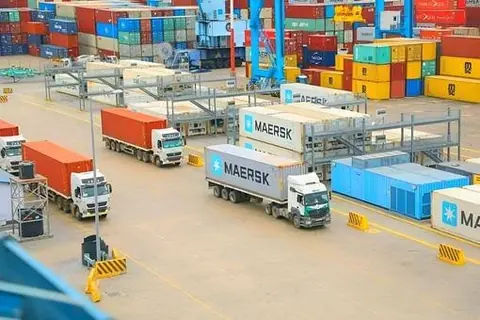
When the ship arrives, the container is discharged and moved to the container yard. Before it can leave:
- the shipping line must release it (usually once freight charges are settled and the original or telex-released bill of lading is presented);
- customs must clear it for transit or under the Single Customs Territory process;
- any port charges must be paid.
Watch the free time. Shipping lines and the port allow a limited number of days before storage, demurrage and detention charges start. Fast release depends on everything above being ready when the ship arrives. Our article on transit cargo from Mombasa goes into the port stage in detail.
Step 5: the road (or rail) journey inland
Most cargo leaves Mombasa by truck. Some moves inland by rail before continuing by road. On the Northern Corridor, transit trucks are fitted with electronic seals under the Regional Electronic Cargo Tracking System (opens in a new tab), launched in 2017 by Kenya, Uganda and Rwanda, which reports each vehicle's position and any tampering.
Points to manage on the road:
- Weight limits. Axle-load rules are enforced at weighbridges.
- Driver and vehicle documents. These must be in order at every border.
- Security of the load. Sealed containers and correct lashing for break-bulk.
- Communication. You should be able to find out where your truck is.
Step 6: crossing the borders
Every route from Mombasa crosses at least the Kenya–Uganda border, at Malaba or Busia. After that:
| Destination | Typical borders after Kenya–Uganda |
|---|---|
| Kigali and Rwanda | Gatuna/Katuna or Kagitumba/Mirama Hills into Rwanda |
| Goma | Into Rwanda, then Rubavu–Goma; or from Uganda directly into North Kivu |
| Bukavu | Into Rwanda, then Rusizi–Bukavu |
| Bujumbura | Through Rwanda into Burundi, or via Tanzania to Kobero/Kabanga, depending on current conditions |
Border status changes. Burundi closed its land border with Rwanda in January 2024; reports in September 2026 describe it as still closed to people while goods move (KT Press (opens in a new tab)). On Lake Kivu, the Rubavu–Goma crossings were shut for roughly a month from mid-May 2026 during an Ebola response (The EastAfrican (opens in a new tab)). Confirm the route on the day of dispatch.
Step 7: clearance and delivery at destination
At destination, duties and taxes are paid, any inspection is carried out and the goods are released. Then:
- the cargo is delivered to your premises, a project site or a warehouse;
- the container is unpacked and the empty is returned to the shipping line's designated depot;
- the forwarder returns the release and delivery documents to you.
If you are not ready to receive the goods, a warehouse in Rwanda can hold them and deliver as needed.
How to ship cargo from Mombasa to each destination
To Rwanda
The most established lane on the corridor. Cargo crosses Kenya and Uganda, enters Rwanda in the north and is cleared by the Rwanda Revenue Authority. See Mombasa to Rwanda logistics.
To the DRC
Mombasa serves eastern DRC: North Kivu, South Kivu and Ituri. Read the Mombasa to DRC freight guide for the full picture, plus our city guides to Mombasa to Goma freight and Mombasa to Bukavu freight. Our service page is Mombasa to DRC logistics.
To Burundi
The longest of the three and the most affected by routing questions. Read Mombasa to Burundi freight and see our Mombasa to Burundi logistics service.
What drives the cost
We do not publish fixed prices, because they depend on too many variables. The main ones are:
- ocean freight to Mombasa from your origin;
- port and shipping line charges, including any storage or demurrage;
- inland trucking rate, which depends on destination, truck type and season;
- transit bonds and border charges;
- duties and taxes at destination;
- clearance, handling and delivery fees;
- the return of the empty container;
- insurance.
An itemised quote shows you where the money goes, so you can make informed decisions, such as whether LCL or FCL is better, or whether another port makes more sense.
Mistakes to avoid
- Waiting for the ship to arrive before sorting documents. By then, free time is already ticking.
- Inconsistent consignee details. A spelling difference can stop a truck at the border.
- Assuming last month's route still works. Check the borders before dispatch.
- Forgetting the empty container. The return trip can be long and costly.
- Not insuring the cargo. Long journeys mean more hand-overs.
- Shipping regulated goods without permits. They may be held at destination until approvals arrive.
Mombasa or Dar es Salaam?
For many shipments, Dar es Salaam is a serious alternative, especially for Burundi. Read Mombasa vs Dar es Salaam and our companion guide on how to ship cargo from Dar es Salaam.
How Haraka Freight helps
Haraka Freight International is a Kigali-based logistics company providing transportation, warehousing and distribution in Kenya, Uganda, Tanzania, Rwanda and Burundi, with transit cargo to Goma and Bukavu. For shipments through Mombasa we handle the whole chain: document checks before sailing, the destination declaration or transit entries, port release, trucking, border coordination, clearance and delivery. Our freight forwarding and customs clearance teams work together, so you deal with one contact from start to finish.
Conclusion
Knowing how to ship cargo from Mombasa comes down to seven steps: plan early, get documents right at origin, declare before arrival, release quickly at the port, move inland under proper transit, cross the borders with current information and clear at destination. Do those well and the Northern Corridor becomes a reliable route to Rwanda, eastern DRC and Burundi. When you have a shipment coming up, request a quote or WhatsApp our Kigali team.
Sources: Kenya Ports Authority (opens in a new tab); NCTTCA (opens in a new tab); Uganda Revenue Authority, Single Customs Territory (opens in a new tab); World Customs Organization, RECTS (opens in a new tab); KT Press (2026) (opens in a new tab); The EastAfrican (2026) (opens in a new tab); ICC Incoterms (opens in a new tab).
Frequently asked questions
What is the first step to ship cargo through Mombasa to Rwanda, the DRC or Burundi?
Confirm the final delivery address and the trade terms with your supplier, then appoint a forwarder who will check the documents before the goods are loaded at origin.
Do I pay duty in Kenya on cargo going to Rwanda or Burundi?
No. Cargo for Rwanda and Burundi moves in transit through Kenya. Under the EAC Single Customs Territory, duties and taxes are paid in the destination country.
What documents are needed at Mombasa?
Typically the bill of lading, commercial invoice and packing list, plus the destination declaration or transit entry, any permits for regulated goods and, for Burundi, the cargo tracking note where required.
How are transit trucks monitored?
On the Northern Corridor, transit cargo carries electronic seals under the Regional Electronic Cargo Tracking System, which reports location and tampering to the revenue authorities of Kenya, Uganda and Rwanda.
How long does it take to ship from Mombasa to Kigali, Goma or Bujumbura?
It depends on port dwell, documentation, trucking, border processing and conditions on the route. Ask for an estimate for your specific shipment.
Can I ship less than a full container through Mombasa?
Yes. LCL (shared container) shipments are possible; after the container is unpacked at a facility, your goods continue inland with other cargo for the same destination.
Published · Last updated

Haraka Freight International Ltd is a logistics company based at Ituze House, KG 11 Avenue, Bibare, Kigali, Rwanda. We handle freight forwarding, customs clearance, IOR/EOR and DDP shipments, warehousing, trucking and regional distribution in Kenya, Uganda, Tanzania, Rwanda and Burundi, with transit cargo to Goma and Bukavu.