In this article
- What a trade corridor actually is
- The Northern Corridor and the NCTTCA
- The Central Corridor and the CCTTFA
- How each corridor reaches the DRC
- How each corridor reaches Burundi
- Customs tools on the two corridors
- Risks to weigh
- Northern Corridor vs Central Corridor: how to choose
- How Haraka Freight helps
- Conclusion
East Africa's trade runs along two great corridors. The Northern Corridor links the port of Mombasa to the interior through Kenya and Uganda. The Central Corridor links the port of Dar es Salaam to the interior through Tanzania. Both claim the Democratic Republic of the Congo and Burundi as members, and both carry cargo for them every day.
For importers in Goma, Bukavu, Lubumbashi or Bujumbura, the question Northern Corridor vs Central Corridor shapes everything that follows: which port the ship calls at, which borders the truck crosses, which customs offices handle the paperwork and what can go wrong. This guide compares the two corridors specifically for DRC and Burundi cargo. For a port-level comparison that also covers Rwanda, read Mombasa vs Dar es Salaam.
What a trade corridor actually is
A corridor is more than a road. It is the combination of a seaport, the roads, railways, lake links and pipelines leading inland, the border posts along the way, and the agreements between governments that let cargo move across several countries under one set of rules.
Each corridor also has an intergovernmental agency. These agencies do not move cargo themselves. They coordinate policy, monitor performance, push for simpler procedures and bring member states together to solve problems. For shippers, their importance is indirect but real: many of the tools that speed up transit cargo, such as electronic cargo tracking and single declarations, were developed through these corridor frameworks.
The Northern Corridor and the NCTTCA
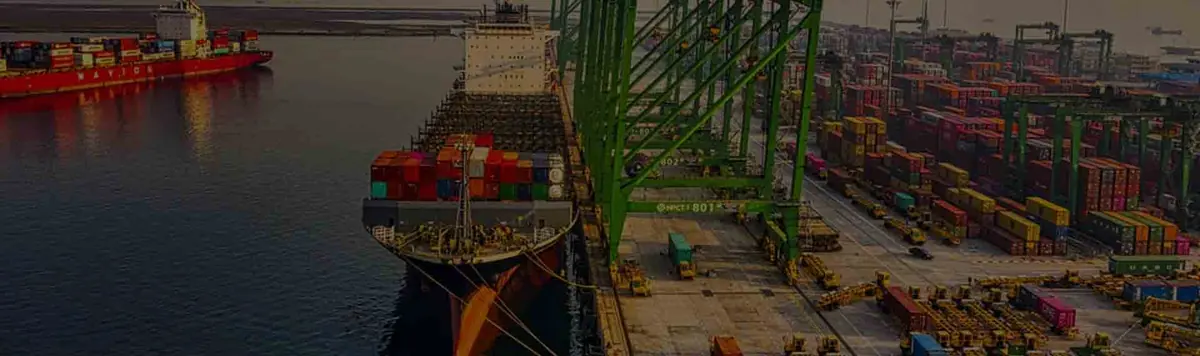
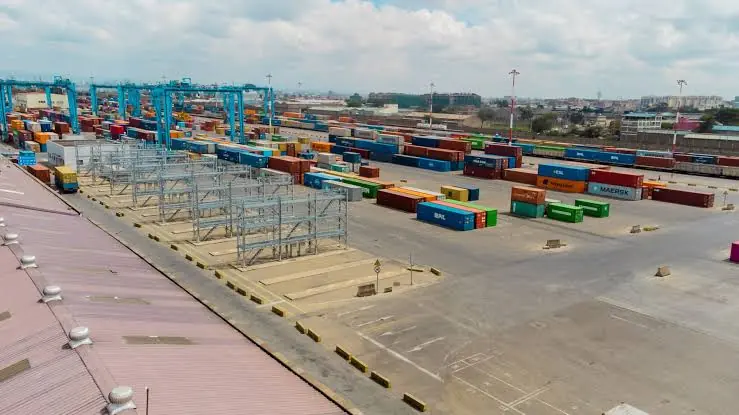
The Northern Corridor starts at the port of Mombasa, run by the Kenya Ports Authority (opens in a new tab), and runs west through Kenya and Uganda. From Uganda, branches lead to Rwanda, Burundi, eastern DRC and South Sudan.
It is coordinated by the Northern Corridor Transit and Transport Coordination Authority (opens in a new tab) (NCTTCA). Its six member states are:
- Burundi
- the Democratic Republic of the Congo
- Kenya
- Rwanda
- South Sudan
- Uganda
One of the corridor's best-known tools is the Regional Electronic Cargo Tracking System (opens in a new tab) (RECTS), launched by Kenya, Rwanda and Uganda in February 2017. An electronic seal fitted to the transit vehicle reports its location and any tampering to customs, so goods can move under customs control without being escorted.
The Central Corridor and the CCTTFA
The Central Corridor starts at the port of Dar es Salaam, run by the Tanzania Ports Authority (opens in a new tab), and crosses Tanzania by road and rail. From Tanzania, branches lead to Rwanda, Burundi, the DRC, Uganda and, through Zambia, to southern Africa.
It is coordinated by the Central Corridor Transit Transport Facilitation Agency (opens in a new tab) (CCTTFA), whose secretariat is in Dar es Salaam. Its seven member states are:
- Burundi
- the Democratic Republic of the Congo
- Malawi (joined 2023)
- Rwanda
- Tanzania
- Uganda
- Zambia (joined 2023)
The Central Corridor is more multimodal than the Northern Corridor for our purposes. Tanzania's central railway reaches Kigoma on Lake Tanganyika, from where cargo can continue by lake to Burundi or the DRC shore, and the TAZARA railway (opens in a new tab) links Tanzania with Zambia on the way to the Congolese copper belt.
How each corridor reaches the DRC
| DRC destination | Northern Corridor (from Mombasa) | Central Corridor (from Dar es Salaam) |
|---|---|---|
| Goma (North Kivu) | Kenya → Uganda → Rwanda → Rubavu–Goma | Tanzania → Rusumo → Rwanda → Rubavu–Goma |
| Beni, Butembo (North Kivu) | Kenya → Uganda → e.g. Mpondwe–Kasindi | Usually through Rwanda; longer |
| Bukavu (South Kivu) | Kenya → Uganda → Rwanda → Rusizi–Bukavu | Tanzania → Rusumo → Rwanda → Rusizi–Bukavu |
| Uvira, lake ports | Long road route | Rail to Kigoma, then Lake Tanganyika; or road via Burundi |
| Lubumbashi, Kolwezi | Rarely practical | Tanzania → Tunduma–Nakonde → Zambia → Kasumbalesa |
Two patterns stand out. For the Kivus, both corridors usually funnel through Rwanda, so the decision often turns on port and road conditions rather than geography. For the north of North Kivu and for the copper belt, geography decides: Uganda for the first, Zambia for the second.
Whichever corridor you choose, DRC cargo is transit cargo until it reaches the Congolese border. It is imported in the DRC, through the Direction Générale des Douanes et Accises (opens in a new tab) (DGDA). Our guide to DRC customs clearance for transit cargo explains each stage.
How each corridor reaches Burundi
| Route | Northern Corridor | Central Corridor |
|---|---|---|
| Road | Kenya → Uganda → Rwanda → Burundi, or Kenya → Tanzania → Kobero/Kabanga | Tanzania → Kobero/Kabanga → Burundi |
| Rail and lake | Not typical | Rail to Kigoma, then Lake Tanganyika to Bujumbura |
| Countries crossed before Burundi | Two or three | One |
For Burundi, the Central Corridor's advantage is structural: it crosses only Tanzania. That advantage has grown since Burundi closed its land border with Rwanda on 11 January 2024. KT Press reported in September 2026 (opens in a new tab) that the border remains closed to people while goods continue to flow, but any route that relies on that crossing carries extra uncertainty.
Burundi applies the EAC Single Customs Territory, so Burundi-bound goods on either corridor are declared once, with the Office Burundais des Recettes (opens in a new tab) (OBR), and taxed in Burundi (TRA explainer (opens in a new tab)). Many sea shipments also need a cargo tracking note (BSC/ECTN) issued at the port of loading. See how customs clearance works for transit cargo to Burundi.
Customs tools on the two corridors
| Tool | What it does | Where it matters |
|---|---|---|
| Single Customs Territory | One declaration at destination; duties paid at destination | Rwanda and Burundi on both corridors |
| Transit declarations and bonds | Let goods cross a country without paying duty there | All DRC cargo; any cargo crossing a third country |
| RECTS electronic seals | Track transit vehicles and alert customs to tampering | Northern Corridor (Kenya, Uganda, Rwanda) |
| Cargo tracking notes | Pre-shipment data required by some destinations | Burundi sea cargo (BSC/ECTN); confirm for DRC routings |
The tools are designed to reduce stops and paperwork, but they only work when the data is right. A declaration lodged with the wrong consignee or weight can hold a truck at the very border the system was meant to speed up.
Risks to weigh
Border closures. The Kivus and the Rwanda–Burundi frontier have both seen closures. In May 2026 the Goma–Rubavu crossings closed for about a month after an Ebola case in Goma (The EastAfrican (opens in a new tab)). A corridor choice should include a fallback.
Extra hand-overs. Rail and lake legs on the Central Corridor reduce road kilometres but add transfers. Each transfer is a risk for fragile goods.
Distance and container returns. The further inland a container travels, the longer it takes to come back, and the more detention charges matter.
Road works and weather. Both corridors have sections where works or heavy rain slow traffic for weeks at a time.
Northern Corridor vs Central Corridor: how to choose
For Burundi, start with the Central Corridor and only switch to the Northern Corridor if the ocean service into Mombasa is clearly better and the inland route is workable.
For Lubumbashi and the copper belt, use the Central Corridor through Zambia.
For Beni, Butembo and northern North Kivu, look first at the Northern Corridor through Uganda.
For Goma and Bukavu, compare both. Shipping line service, port conditions, truck availability and the latest border news usually decide.
In every case, compare door-to-door costs rather than ocean freight alone, and agree a plan B before the truck leaves the port.
How Haraka Freight helps
Haraka Freight International works on both corridors from our base in Kigali. We transit commodities to Goma and Bukavu and provide transportation, warehousing and distribution in Kenya, Uganda, Tanzania, Rwanda and Burundi. We compare the Northern and Central Corridors for your cargo, handle the transit and destination documents, organise the trucks and coordinate every border, then clear and deliver the goods. See our Mombasa to DRC logistics, Dar es Salaam to DRC logistics and Dar es Salaam to Burundi logistics services, or the overview of all corridors in East Africa.
Conclusion
The Northern Corridor and the Central Corridor both serve the DRC and Burundi, and both have improved a great deal through regional cooperation. The Central Corridor is the more direct path to Burundi and the copper belt; the Northern Corridor offers a useful way into North Kivu through Uganda; and the Kivus are open to both. Make the choice shipment by shipment, with up-to-date border information and a full cost comparison. To get that comparison for your next consignment, request a quote.
Sources: NCTTCA (opens in a new tab); CCTTFA (opens in a new tab); Kenya Ports Authority (opens in a new tab); Tanzania Ports Authority (opens in a new tab); WCO, RECTS launch (2017) (opens in a new tab); TRA, Single Customs Territory (opens in a new tab); TAZARA (opens in a new tab); KT Press (2026) (opens in a new tab); The EastAfrican (2026) (opens in a new tab).
Frequently asked questions
What is the difference between the Northern Corridor and the Central Corridor?
The Northern Corridor runs from the port of Mombasa through Kenya and Uganda to Rwanda, Burundi, eastern DRC and South Sudan. The Central Corridor runs from the port of Dar es Salaam across Tanzania to Rwanda, Burundi, the DRC and other neighbours. Each has its own intergovernmental agency.
Which countries are members of each corridor agency?
The NCTTCA's members are Burundi, the DRC, Kenya, Rwanda, South Sudan and Uganda. The CCTTFA's members are Burundi, the DRC, Malawi, Rwanda, Tanzania, Uganda and Zambia; Malawi and Zambia joined in 2023.
Which corridor is better for Burundi?
The Central Corridor is usually more direct, because it reaches Burundi from Tanzania without crossing a third country. The Northern Corridor route passes through Uganda and Rwanda, or through Tanzania, depending on border conditions.
Which corridor is better for the DRC?
It depends on where in the DRC. Both serve Goma and Bukavu through Rwanda. The Northern Corridor can also reach North Kivu directly through Uganda, while the Central Corridor reaches Lubumbashi through Zambia.
Are transit trucks tracked on the corridors?
On the Northern Corridor, the Regional Electronic Cargo Tracking System launched by Kenya, Uganda and Rwanda in 2017 tracks transit cargo with electronic seals. On other routes, national and corridor tracking arrangements apply; your forwarder should confirm what is used for your shipment.
Can I use one corridor for the ocean leg and switch later?
The corridor is effectively fixed once the port of discharge is set on the bill of lading. Inland, you can sometimes change the route between borders, for example through Tanzania instead of Rwanda for Burundi, but plan that before the cargo leaves the port.
Published · Last updated

Haraka Freight International Ltd is a logistics company based at Ituze House, KG 11 Avenue, Bibare, Kigali, Rwanda. We handle freight forwarding, customs clearance, IOR/EOR and DDP shipments, warehousing, trucking and regional distribution in Kenya, Uganda, Tanzania, Rwanda and Burundi, with transit cargo to Goma and Bukavu.